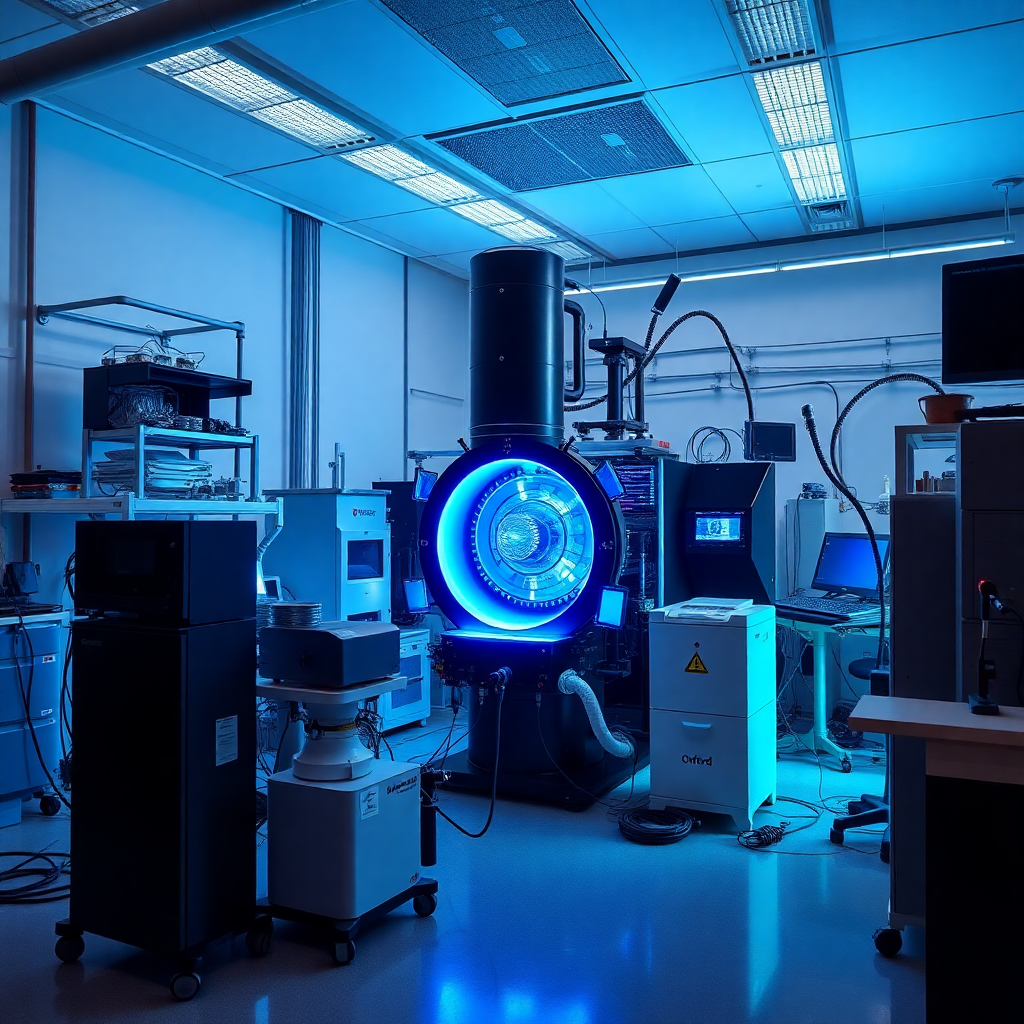

In a groundbreaking achievement that could revolutionize quantum technology, researchers at the University of Versantus have successfully observed quantum entanglement at room temperature for the first time, overcoming one of the most significant barriers to practical quantum computing.
The research team, led by Professor David Thompson from the Department of Physics, demonstrated stable quantum entanglement in a novel diamond-based material system that maintains coherence without the need for extreme cooling typically required for quantum experiments.
A Breakthrough in Quantum Science
"This represents a fundamental shift in what we thought was possible with quantum systems," said Professor Thompson. "For decades, the scientific community believed that quantum effects could only be observed at temperatures close to absolute zero. Our work demonstrates that with the right materials and techniques, we can harness quantum phenomena in everyday conditions."
"This could be the key that unlocks practical quantum computing for everyone, not just specialized laboratories with expensive cooling equipment."
— Prof. David Thompson
The team's approach utilizes nitrogen-vacancy centres in synthetic diamond, combined with a proprietary technique for isolating the quantum states from environmental interference. This method allows the entangled particles to maintain their quantum properties for milliseconds—an eternity in quantum terms—at temperatures up to 25°C.
Implications for Technology
The implications of this discovery extend far beyond the laboratory. Room-temperature quantum systems could enable:
- Quantum computers that don't require massive cooling infrastructure
- Ultra-sensitive medical imaging devices
- Unbreakable encryption systems for everyday communications
- Quantum sensors for navigation and geological surveying
Next Steps
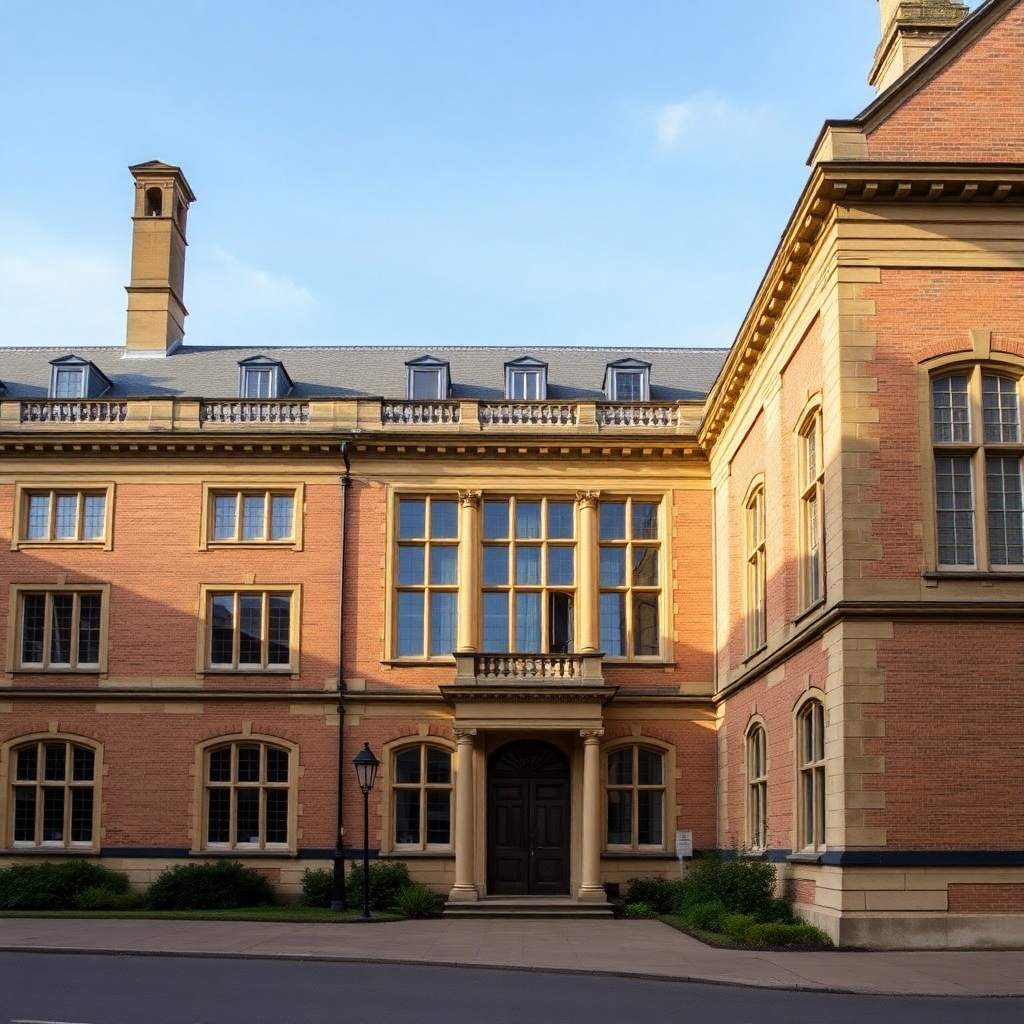
The research team is now working to extend the coherence time and scale up the system to handle more qubits. They have received a £15 million grant from the Engineering and Physical Sciences Research Council (EPSRC) to continue their work over the next five years.
The findings have been published in the journal Nature Physics and have already attracted significant interest from technology companies and government agencies worldwide.
Publication Details
Title: Room-temperature quantum entanglement in nitrogen-vacancy diamond systems
Authors: Thompson, D.A., Zhang, L., Patel, P., et al.
Journal: Nature Physics, January 2025